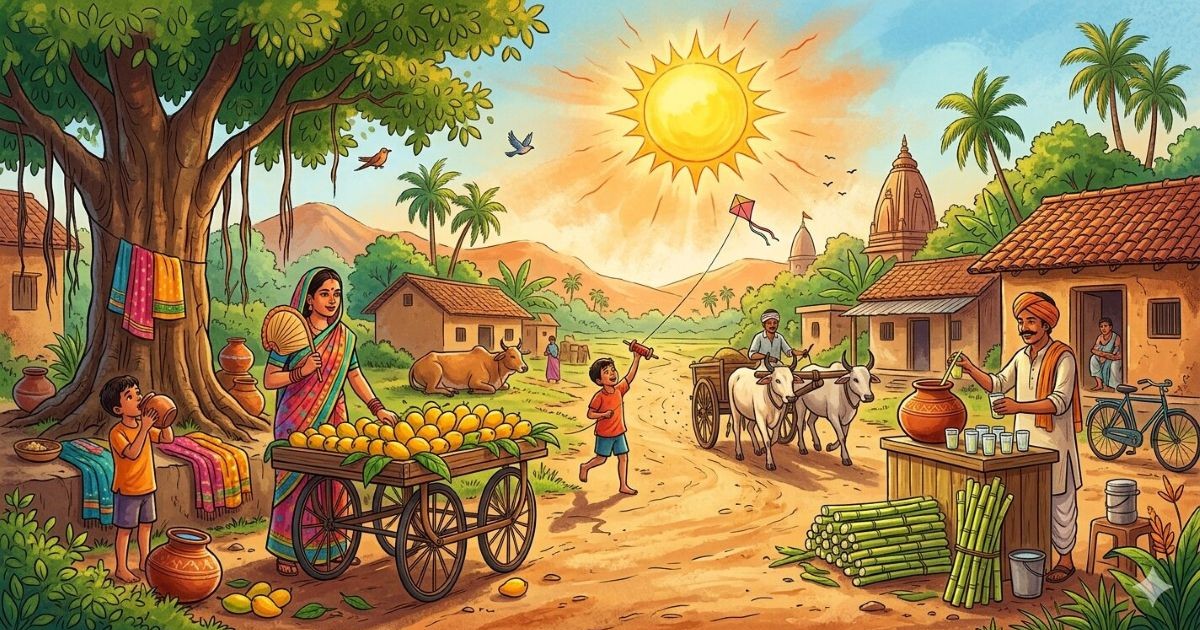
Grishma Ritu — Ayurvedic summer wellness with cooling practices
Ritucharya · Seasonal Wellness

Grishma Ritu
Ayurvedic Summer Wellness

April 21 – June 21. The season of intense heat, when your body reaches its minimum strength. Ayurveda prescribes cooling, hydrating, and energy-conserving practices to protect your vitality and prevent heat-related imbalances.

Get Summer Practices in App Personalized for your dosha · Free

Why Grishma Demands Attention

Grishma is the peak of the sun's northward journey — the period when the sun draws moisture and energy from the earth and your body. Vata dosha begins accumulating due to dryness, while Pitta naturally rises with the heat. Digestive fire (Agni) weakens significantly. This makes Grishma the season where your body has the least reserves — and where the right practices matter most.

💧
Hydrate
Cool beverages, not ice-cold — coconut water, buttermilk, coriander water
🍚
Lighten
Sweet, liquid, easily digestible foods that don't burden weak Agni
🌿
Cool
Sandalwood, vetiver, rose water — external and internal cooling
😴
Rest
Daytime sleep is permitted — conserve energy, avoid exertion

Daily Morning Essentials

1. Cool Water Bath

Take an early morning bath with cool water before sunrise. Add sandalwood (Chandan) powder, vetiver (Khus), or Kewda water for enhanced cooling. This provides immediate relief from overnight heat accumulation and prepares the body for intense daytime temperatures.

2. Cooling Drink

Consume cool (not ice-cold) water with soaked basil seeds (Sabja), rose preserve (Gulkand), or fresh lime with rock sugar (Mishri). Take on empty stomach to cool internal heat and support weakened Agni without shocking the system.

3. Sandalwood Application

Apply sandalwood (Chandan) paste or vetiver (Khus) paste on forehead, temples, and chest. These provide sustained cooling throughout the day through transdermal absorption. Mix with rose water for enhanced Pitta-pacifying effect.

4. Cooling Breath Practice

Practice Sheetali or Sheetkari Pranayama for 10–15 minutes in early morning. These cooling breathing techniques directly reduce body temperature, calm the nervous system, and preserve energy. Practise in shade or cool indoor environment.

Daily Dietary Essentials

1. Sweet Taste Priority

Emphasise sweet (Madhura), cooling, unctuous/oily, and liquid foods. Include rice, milk, ghee, sweet fruits like grapes, pomegranate, and melon. These tastes naturally pacify both Vata and Pitta while providing energy without excessive heat.

2. Liquid Food Protocol

Consume predominantly liquid and semi-liquid foods: thin rice gruel (Manda), thick rice water (Peya), diluted buttermilk (Chaas) with cumin (Jeera) and mint (Pudina), and cooling drinks (Panaka). Solid, heavy foods are difficult for weakened summer Agni.

3. Cooling Fruit Intake

Include water-rich, cooling fruits daily: watermelon, muskmelon, coconut, grapes (Angoor), and pomegranate (Anar). Consume between meals as mid-morning or afternoon refreshment. These provide natural hydration, minerals, and cooling energy.

4. Cooling Beverages

Drink cooling beverages throughout the day: Thandai, Aam Panna, Sattu drink, coconut water, and Jaljeera. Consume at room temperature, never ice-cold, to support digestive capacity.

Daily Lifestyle Essentials

1. Cool Shade Seeking

Stay in cool, shaded environments during daytime hours. Use natural cooling methods like wet cloth, fans, or sitting near water bodies. Avoid direct sun exposure between 10 AM and 4 PM completely, as even brief exposure can cause heat exhaustion.

2. Exercise Restriction

Avoid all strenuous physical exercise, competitive sports, or activities causing excessive sweating. Gentle walking during early morning or evening, light stretching, and restorative yoga are the maximum activity levels to prevent depleting your minimal strength reserves.

3. Cool Clothing Protocol

Wear light-coloured, loose-fitting cotton or linen clothing that allows air circulation. Cover your head when outdoors and use natural fabrics that absorb moisture. Avoid synthetic materials, tight clothing, or dark colours that absorb heat.

4. Permitted Daytime Rest

Daytime sleep is specifically allowed and recommended during Grishma Ritu to conserve energy and avoid peak heat. Rest in cool, well-ventilated rooms during afternoon hours to preserve strength and prevent heat-related exhaustion.

Daily Evening Essentials

1. Evening Cool Bath

Take an evening bath with cool water adding rose water, sandalwood (Chandan), or Kewda water. This removes accumulated heat from the day and prepares the body for comfortable sleep despite warm nighttime temperatures.

2. Light Evening Meals

Consume very light evening meals like cooling fruits, Sattu drinks, light Khichdi, or cooling milk preparations. Avoid all heating foods, spices, or heavy meals that would burden the already weakened nighttime Agni.

3. Cool Water Consumption

Drink cool water or cooling preparations in the evening: coriander (Dhaniya) water, Fennel water with rock sugar (Mishri), or rose preserve (Gulkand) with cool water. These maintain hydration and internal cooling without disturbing digestion.

4. Moonlight Exposure

Spend time in moonlight, sleep on terraces under stars if possible, or in well-ventilated rooms. Use natural cooling methods like sleeping on the floor with light cotton bedding. Avoid heavy blankets or enclosed sleeping arrangements.

These Practices, Personalized for You

The app filters all Grishma practices based on your Prakriti (body type) and current health state — so you only see what's safe and beneficial for your constitution.

Get Personalized Summer Plan

What to Avoid During Grishma Ritu

Dietary Restrictions

Completely avoid hot foods, heated spices, red chilies, garlic, and dry ginger which increase internal heat. Minimise salt intake including pickles, salted snacks, and processed foods that increase thirst and body heat. Avoid sour and pungent foods like fermented items, vinegar, and excessive citrus. Stay away from heavy foods like rich gravies, fried items, and complex meals that burden the weak Agni. Avoid or significantly reduce alcohol consumption which causes dehydration and increases body heat.

Lifestyle Restrictions

Absolutely avoid direct sunlight exposure, especially midday sun, hot surfaces, or prolonged outdoor activities. Avoid strenuous exercise, running, weightlifting, competitive sports, or any activity causing excessive sweating. Avoid hot winds, heated rooms, sitting near fire, or exposure to artificial heating sources. Limit sexual activity significantly as it depletes already minimal vital essence and energy reserves. Avoid anger, emotional stress, or mental agitation which increases internal heat and weakens immunity.

Environmental Cautions

Avoid walking barefoot on hot surfaces, sitting in vehicles parked in the sun, or staying in poorly ventilated spaces. Allow foods to cool to room temperature before eating — avoid consuming very hot, freshly cooked food. Paradoxically, also avoid ice-cold foods and drinks that shock the weakened digestive system. Avoid late evening activities or staying awake late which further depletes energy reserves.

Common Summer Health Concerns

Grishma Ritu commonly triggers heat-related health issues. If you're experiencing any of these, the Daily Ayurveda app provides personalised healing plans based on which dosha is imbalanced:

  • Acidity and heartburn — Pitta aggravation from heat is the most common summer complaint
  • Skin rashes and inflammation — heat and sweat trigger Pitta-type skin reactions
  • Hair fall — excess Pitta weakens hair roots during summer
  • Dehydration and excessive thirst — Vata accumulation dries tissues
  • Fatigue and burnout — the body's minimum strength makes exhaustion more likely
  • Irritability and frustration — rising Pitta affects mental equilibrium

Navigate Summer with Confidence

The Daily Ayurveda app delivers Grishma-specific practices daily, filtered for your body type. Morning routines, dietary guidance, and evening rituals — refreshed throughout the season.

Download Free App

Free to download · No subscription required

← Vasanta (Spring) All Seasons Varsha (Monsoon) →

The information on this page is for general wellness education based on traditional Ayurvedic principles. All content is reviewed by Dr. Manasa Hebbar (BAMS, MD Ayurveda). This is not medical advice. For serious, chronic, or worsening symptoms, please consult a qualified healthcare professional.

Download Free App